Cash Use Falling in New Zealand, But Remains High
This article was first published in Cash and Payment News and is republished here with permission from the editor.
The CashMoney in physical form such as banknotes and coins. More Use Survey provides data on how people in New Zealand access and use cash, how these patterns are changing over time, and how this varies among different population groups. The survey results are used to inform the RBNZ’s policy decisions, initiatives to maintain access to cash, and monitor the resilience and inclusiveness of the payments system for all New Zealanders.
Key findings show that cash continues to play a big role in day-to-day life of the population, although there are clear signs of stress in terms of accessing cash:
67.0% of the population used cash two times or less in the last seven days; 77.2% of the population found it very easy or somewhat easy to withdraw cash; 69.5% of the population store cash somewhere outside of a bank; 53.7% of the population feel concerned about fewer people using cash in the future.
Payment methods and preferences
From 2019 to 2025 the top three paymentA transfer of funds which discharges an obligation on the part of a payer vis-à-vis a payee. More methods for everyday purchases were debit card / EFTPOS, cash, and credit card. Those using contactless payments on their mobile phone (e.g. Google Pay, Apple Pay, Alipay) increased to 28.8% for such purchases, up from 14.7% in 2019.
Frequency and drivers of cash use
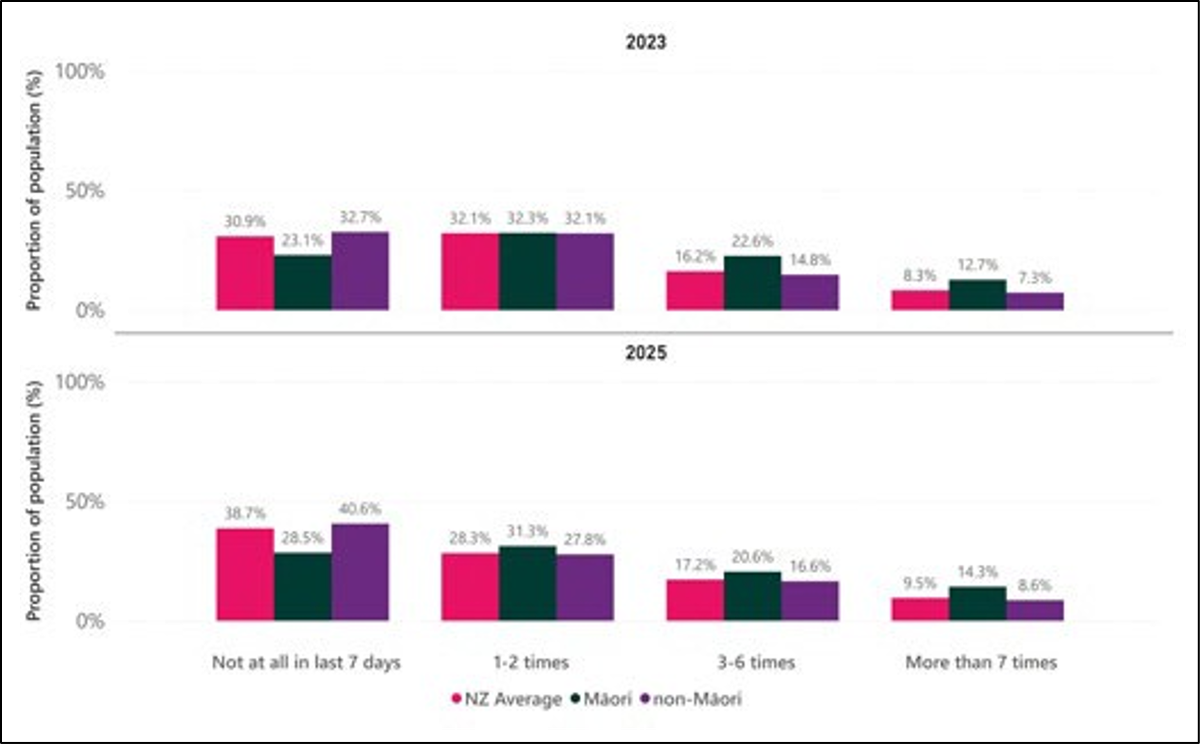
A new cash paradox
Cash use is starting to diversify between those who had not used cash in the past week, which increased from 30.9% in 2023 to 38.7% in 2025, and those who had used cash more than seven times in the past week, which increased from 5.6% in 2021 to 9.5% in 2025. At the same time, the proportion of the population who report that they never use cash decreased, from 11.8% in 2023 to 5.1% in 2025.
Between 2023 and 2025, a growing proportion of the population used cash to manage spending and avoid debt and surcharges, as well as for greater privacy and safety. Those who need cash continue to need it more than ever and the use of cash is also growing.
The top three reasons for using cash in 2025 were: for paying in places that only accept cash; paying small amounts; purchases from private sellers (e.g. not a shop).
Access to cash services
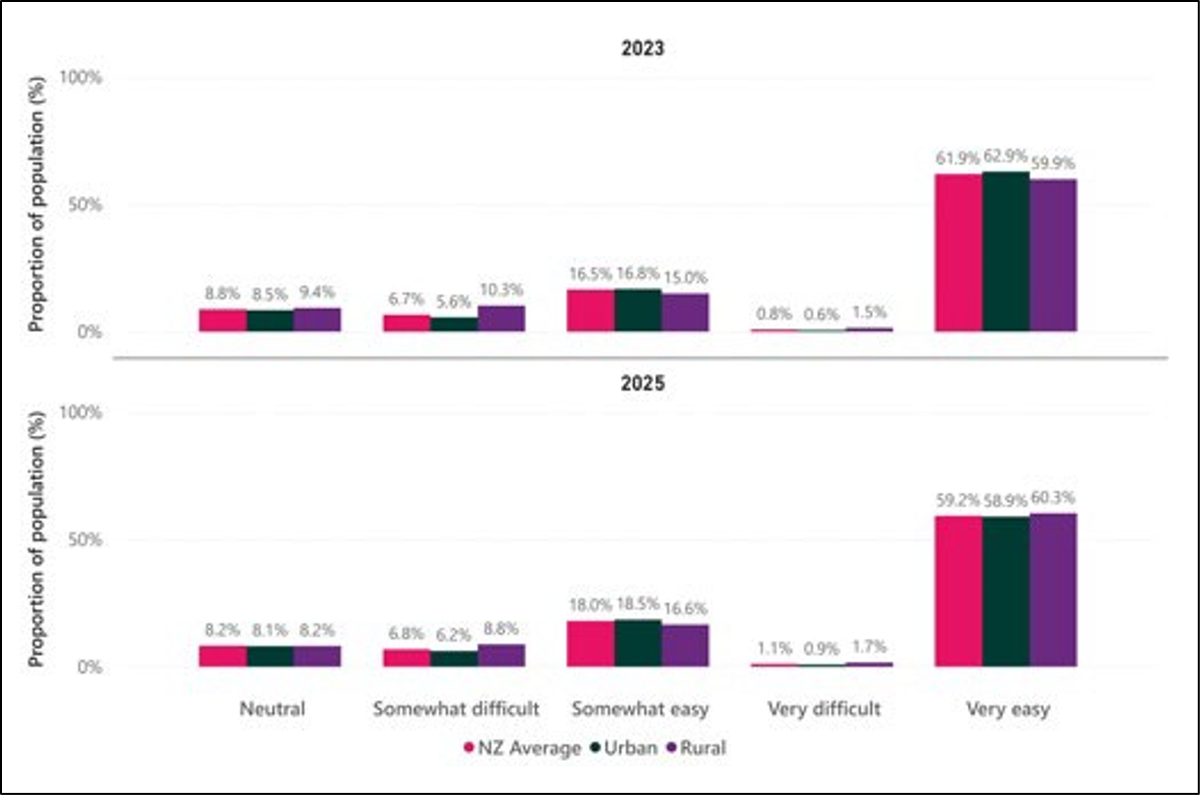
ATMs the key to cash access
While 77.2% found withdrawing cash was very easy or somewhat easy, rural respondents found it somewhat difficult (8.8%) or very difficult (1.7%) to withdraw cash.
ATMs were used by 87.6% of the population in 2025 and remain the most common way to withdraw cash. Non-ATM methods to withdraw cash are declining. A decreasing proportion of the population use supermarket checkouts (down from 38% in 2019 to 28.5% in 2025) or other shop checkouts such as dairies (down from 19.7% in 2019 to 10.5% in 2025).
8% of the population found it difficult to deposit cash because there was no ATM in their area that accepts deposits and 10.9% found it difficult to deposit cash because there was no bank branch in their area.
Storing cash increases dramatically
The percentage of people storing cash somewhere other than their bank accounts increased from 32.8% in 2019 to 69.5% in 2025. Groups who stored more were the 45+ age groups (>70.0%), Māori (71.3%) and rural (73.9%) groups.
The top two reasons for storing cash outside a bank are for emergencies, and for quick access.
Fear for the future of cash
While the fact that over half (53.7%) of the population felt somewhat concerned, or very concerned, about fewer people using cash in the future, those feeling very concerned are perhaps more interesting. Unsurprisingly, a greater proportion of rural residents (27.7%) reported feeling very concerned about declining cash use, as compared to urban residents (17.2%). Over time these surveys show increasing concern by both groups.
Perhaps the key number is that in 2025, 9.9% of the population felt that they wouldn’t be able to cope in the future if they were unable to get or use cash. 45.1% felt that it might be difficult in some situations.
Keeping Cash Local consultation
More than 6,000 people and organisations from all over New Zealand responded to the RBNZ’s ‘Keeping Cash Local’ consultation.
Key concerns from that survey were that it is becoming harder to access cash services, for example:
- Bank branches closing or reducing their opening hours
- Having to pay fees to deposit or withdraw cash
- Travelling further and waiting in long queues to access their own moneyFrom the Latin word moneta, nickname that was given by Romans to the goddess Juno because there was a minting workshop next to her temple. Money is any item that is generally accepted as payment for goods and services and repayment of debts, such as taxes, in a particular region, country or socio-economic context. Its onset dates back to the origins of humanity and its physical representation has taken on very varied forms until the appearance of metal coins. The banknote, a typical representati... More
- ATMs being out of service
- How hard it is to get coins and low-denomination banknotes
- Cash not being accepted as a way to pay
- Not enough in-person support for cash services
- Cash services being inaccessible for disabled people.
Business owners also said that travelling to cash services and waiting to deposit their takings safely costs them time and money.
Desire for minimum cash standards
The RBNZ reported three findings, whilst noting a minority of differing opinions:
- 90% of respondents agreed or strongly agreed that New Zealand needs a minimum cash services standard.
- More than 70% of respondents thought the proposed maximum travel distances to access cash were about right or still too far: 3km in urban areas, 15km in rural settlements and 30km in remote areas.
- Many wanted businesses to be required to accept cash.
Taking action
The combination of the cash survey and the public consultation gives RBNZ clear data of both trends and a snapshot of public opinions which it can use to shape how cash services are provided.
While there is a new paradox of less cash use by many versus more cash use and increased dependence by some, the need to maintain an effective cash system in both rural and urban areas and for every group in society could not be clearer. So too is the sympathy and support of the wider society for cash services.